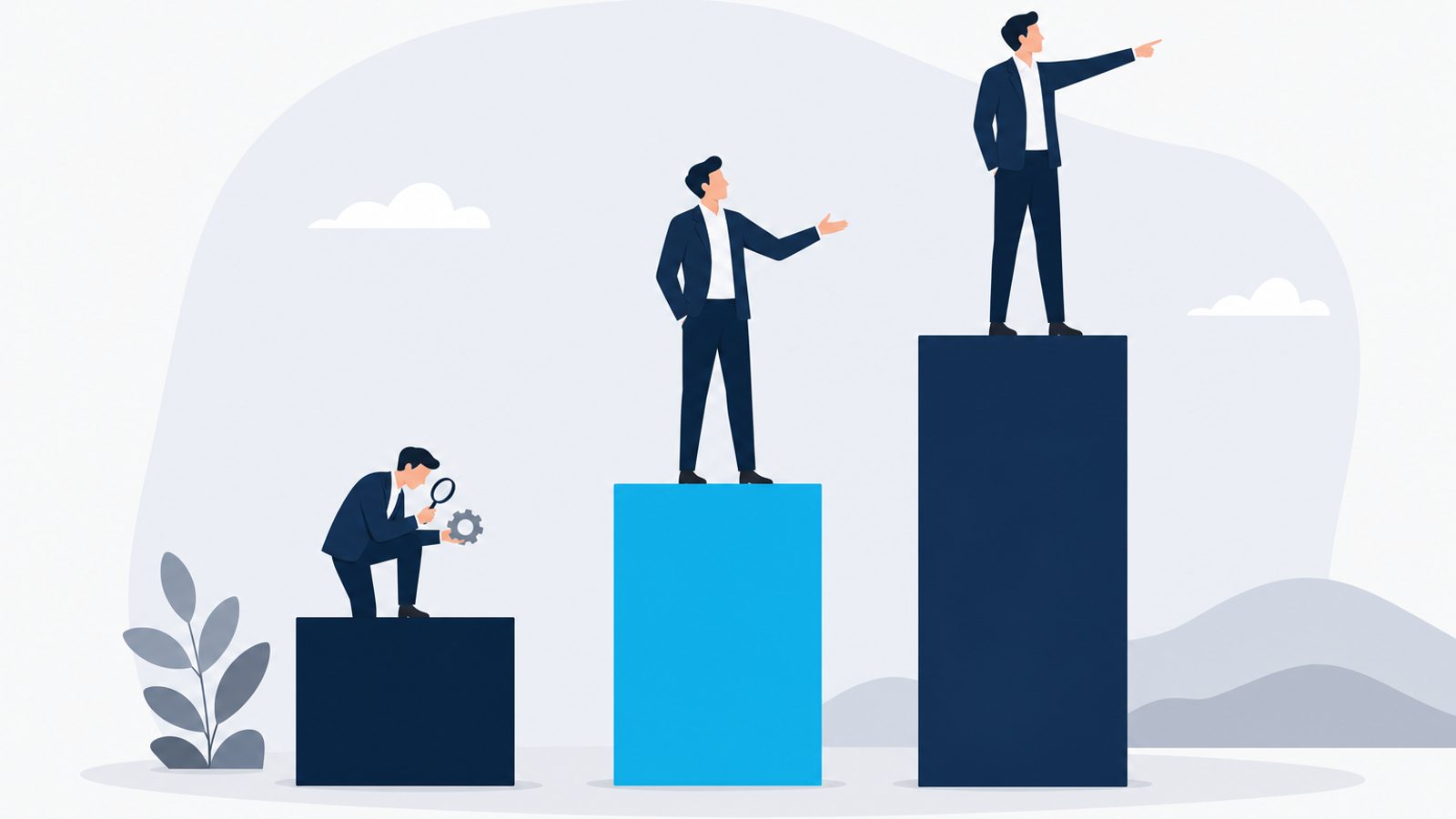
Aligning Levels of Work with individual Mode is key to unlocking potential, driving engagement, and building stronger, future-ready organizations.
Two Essential Ideas for Modern Leadership
When leaders consider how to structure their organizations and develop their people, two powerful concepts emerge: Levels of Work and Mode. Both concepts sit at the heart of the BIOSS framework used by Anker Bioss to help organizations align the complexity of work with the capability of individuals. Although Levels of Work and Mode are closely related, they describe two very different dimensions of work and human potential. Understanding the distinction between them is crucial for building stronger organizations, designing more effective roles, and helping individuals thrive over time.BIOSS frameworkWhen leaders consider how to structure their organizations and develop their people, two powerful concepts emerge: Levels of Work and Mode.
What Levels of Work Tell Us
Levels of Work describe the natural hierarchy of tasks and responsibilities within an organization. At their core, they seek to answer two questions: How complex are the problems someone must solve, and over what timeframe must they think and act independently?
At the lower end of the spectrum, work tends to be immediate, tangible, and structured. Picture a customer service representative handling client inquiries and resolving issues within a few hours or days. Their success depends on following established procedures and applying standard solutions. However, as you move higher in an organization, the nature of work evolves. A regional manager may be responsible for shaping growth strategies over a two- to three-year horizon, coordinating across multiple teams, and adapting to market dynamics. At the very top, a CEO must guide the entire company forward over five to ten years, steering through uncertainties that have not even fully emerged yet.
One of the most critical yet often overlooked aspects of Levels of Work is the intense focus on decision-making. Designing roles using Levels of Work is not just about sorting responsibilities by size or duration; it is about clarifying the kind of decision-making complexity required at each level. At lower levels, decisions are largely procedural and based on clear rules. At higher levels, decisions become increasingly strategic, ambiguous, and high-stakes. Without clear alignment between the expected decision-making complexity and the person assigned to the role, organizations risk confusion, frustration, and poor execution.
Levels of Work allow leaders to design more intelligent and sustainable organizational structures by making decision-making expectations explicit. When done right, they ensure that individuals are matched to roles that challenge and stretch their capabilities appropriately. When ignored, companies risk placing employees in roles that underutilize their talents or overwhelm them with complexity they are not prepared to handle.
How Mode Shifts the Focus to the Individual
While Levels of Work focus on the structure of the organization, Mode turns the lens inward and focuses on the individual. Mode describes how a person processes complexity, makes decisions, and experiences their work. It is not about the tasks they are assigned, but about how they mentally and emotionally approach the challenges in front of them.
In the BIOSS framework, Mode represents an individual’s preferred and natural way of engaging with complexity. Cognitive capability is described as evolving through a series of Modes that reflect increasing levels of complexity in how individuals approach work. It begins with the Declarative Mode, where individuals follow known rules and apply established procedures to well-defined tasks. As they develop, they move into the Cumulative Mode, where they are able to link experiences and draw lessons across similar situations. Growth continues into the Serial Mode, where individuals manage sequences of activities, seeing how actions connect over time to create desired outcomes. Those operating in the Parallel Mode can handle multiple systems or projects simultaneously, integrating different streams of activity and balancing competing priorities. At the highest level, the Strategic Transformational Mode emerges, where individuals no longer just manage existing structures but actively create new systems, redefine environments, and shape future possibilities. Understanding these Modes helps leaders recognize not just what people have done, but how they think and what kind of complexity they are ready to handle.
Mode can evolve over time. As individuals accumulate experience, reflect on their actions, and grow cognitively, they can handle greater complexity and longer timespans of decision-making. When a person’s mode matches the complexity of the work they are asked to do, they experience a state of engagement often referred to as "flow." Work feels energizing and meaningful. However, when a mismatch occurs, the impact is equally strong. If the work is too complex for the individual’s current Mode, they may feel overwhelmed, anxious, or paralyzed. If the work is too simple, they may feel bored, frustrated, or disengaged.
Why the Difference Between Levels and Mode Matters
Understanding the difference between Levels of Work and Mode profoundly changes how organizations operate. First, it highlights that designing effective roles and developing capable people are two distinct challenges. Levels of Work help leaders build logical structures that match organizational needs. Mode helps leaders understand whether a person is cognitively and emotionally ready to succeed within that structure, or whether they might be ready to grow into more complex roles over time.
Second, it reframes how hiring and promotion decisions should be made. Too often, companies focus solely on experience, assuming that past performance is the best predictor of future success. But a resume only reveals what someone has done; it does not show whether they possess the cognitive capacity and decision-making agility required at a higher level of complexity. Assessing Mode alongside experience enables organizations to make smarter, more future-focused talent decisions.
Third, this distinction is essential for managing engagement and performance. When Mode and work complexity are aligned, individuals tend to be more motivated, creative, and resilient. When they are misaligned, organizations often see hidden performance issues, higher turnover, and widespread disengagement — even when everything appears fine on the surface.
Finally, understanding Mode is critical for building strong succession pipelines. Developing leaders is not simply about giving them more experience or larger teams. It is about helping them grow the cognitive and emotional capacity to take on higher, more complex levels of decision-making responsibility over longer periods of time.
A Simple Way to Picture It
To make the difference even clearer, imagine a soccer game. Designing the soccer field — its size, its goals, its rules — is like designing the Levels of Work within an organization. Training the athlete — building their stamina, skill, and strategic thinking — is like developing their Mode. The best outcomes happen when the right athlete plays on the right field. Mismatch them, and even the most talented players will struggle to perform.
Bioss Theory offers a powerful but simple truth: sustainable organizational performance happens when the complexity of the work is carefully matched to the cognitive capability of the individual. Levels of Work provide the blueprint for organizational structure, defining not only roles but the decision-making expectations that come with them. Mode reveals the hidden human capacity to meet those expectations — or to grow into them over time.
When leaders align both dimensions thoughtfully, organizations do not just perform better in the short term. They build environments where individuals thrive, teams perform consistently, and companies stay resilient and ready for the future.