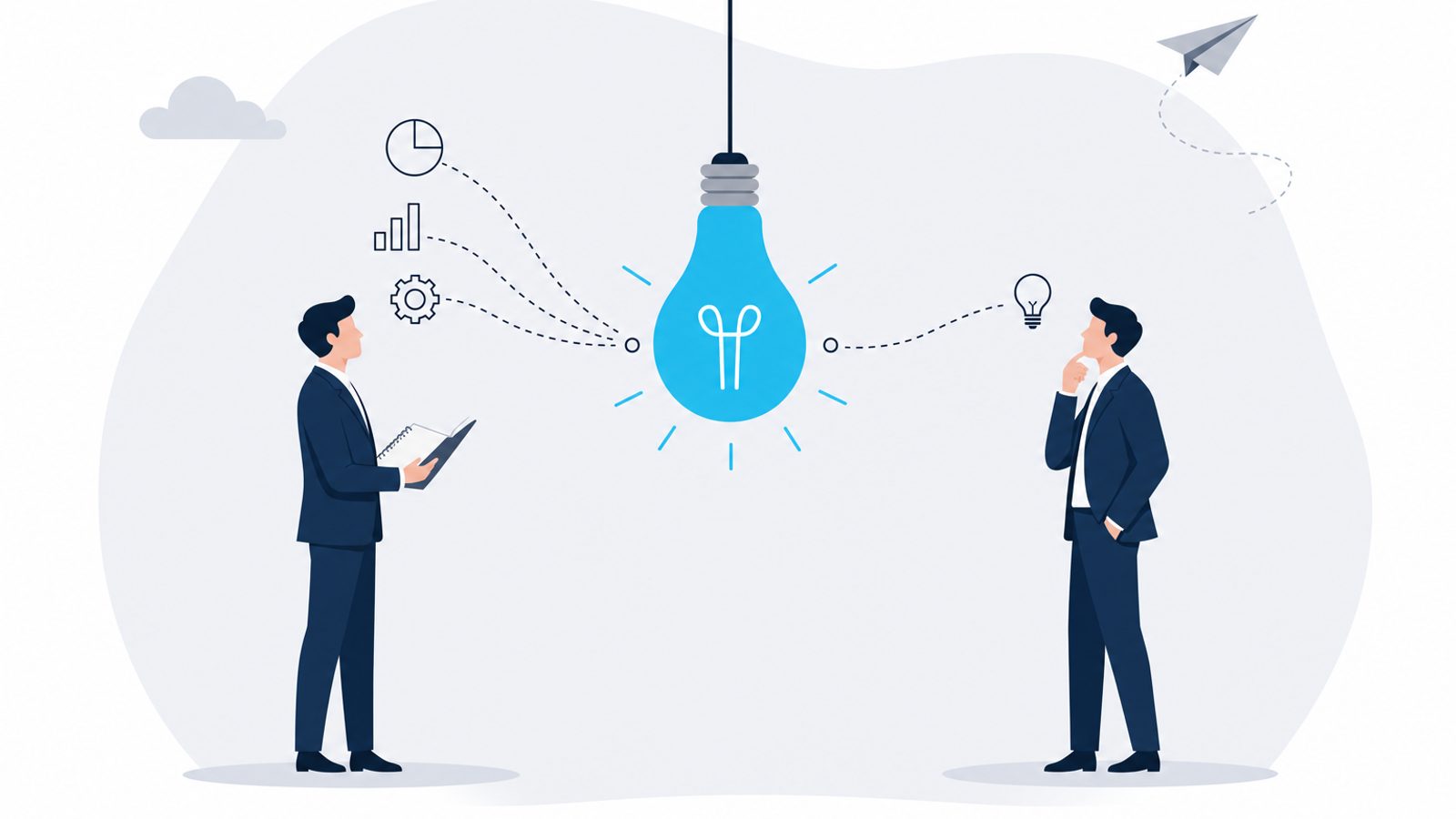
Mode of Thinking shapes how people solve problems by aligning their natural thinking patterns with complexity and time, driving better decisions.
When businesses face complex challenges, they often look for the smartest people or the fastest solutions. But the real key to sustainable success lies in something more subtle: the way people think. Mode of Thinking isn’t about intelligence or expertise. It’s about the natural way individuals process complexity, time, and uncertainty. It shapes how people see problems, how far ahead they can plan, and how they approach decisions. This concept, deeply studied by Gillian Stamp and the BIOSS group, helps explain why two capable leaders might see the same issue in entirely different ways—and why both perspectives can be valuable.
Mode of Thinking describes the built-in structure of someone’s thinking. It’s not a skill you can learn quickly, nor does it shift much over time. It’s an inherent pattern, much like how some people are naturally drawn to detail while others instinctively see the big picture. When organizations align a person’s Mode of Thinking with the complexity of the work they’re asked to do, people thrive. They make better decisions, feel more engaged, and deliver results that match what the role truly requires.
To understand how Mode of Thinking plays out in real life, let’s imagine a scenario. A mid-sized retail company is losing market share. Competitors are slashing prices. Customers are turning to online shopping. The company’s supply chain is starting to show cracks, and the leadership team feels the pressure mounting. Everyone agrees that something must change, but what exactly should they do? Interestingly, the answer depends on who you ask and, more importantly, how they think.
One store manager quickly steps forward with practical suggestions. He notices long lines at checkout and believes that improving in-store service should be the priority. By speeding up checkout, restocking shelves more quickly, and adding more staff to busy shifts, the company can make the shopping experience better almost immediately. His thinking is grounded in what can be done today—fast, visible improvements that target customer frustrations in the moment. This is a concrete, sequential way of thinking. It focuses on immediate actions and simple cause-and-effect relationships. To this manager, the problem is right in front of him and the solution should be too.
Another leader in the operations team takes a different view. She wants to figure out why customers aren’t coming back. She starts analyzing feedback, complaints, and pricing data. She spots that some items are consistently priced higher than nearby competitors. She proposes adjusting pricing, reworking promotional offers, and fixing specific service failures. Her approach digs into the current system to find what’s broken and fix it. Her thinking is diagnostic. She’s still working within the company’s existing structures but is determined to identify root causes and repair them.
Across the hall, a supply chain director sees things from a wider angle. She isn’t focused on the front lines or individual process failures. She’s looking at how the entire system is working—or not working. She realizes that the company’s internal processes are too slow to respond to shifting customer demands. She recommends a larger redesign: integrating stores with an improved online platform, streamlining inventory management, and creating better coordination between teams. Her perspective is systemic. She sees connections across departments and understands that fixing one part won’t help unless the entire chain becomes more responsive. Her ideas require investment and a willingness to change the way the business operates, but they promise to create a more agile, future-ready company.
Meanwhile, the CEO has her eyes on the horizon. She knows the market is evolving, and she isn’t just thinking about catching up—she’s thinking about where the company needs to be in five years. She imagines repositioning the brand from a simple retailer to a lifestyle company. She envisions new partnerships with technology providers to personalize customer experiences. She wants to create subscription models and digital offerings that blend in-store and online shopping in seamless ways. Her thinking is strategic. She’s focusing on positioning the company in the future, not just solving today’s problems. Her vision will take years to fully realize and will require the entire organization to move in a coordinated way.
While the CEO is focused on the five-year path, the company’s founder is thinking even further ahead. He believes the company must leap beyond its current industry model entirely. He starts exploring how to build a virtual shopping environment that could merge augmented reality with in-store visits. He considers launching a logistics business that could compete directly with delivery giants. His thinking is transformational. He isn’t interested in improving what exists; he’s interested in inventing something completely new. His vision could potentially redefine how people shop, but it comes with substantial risk and demands extraordinary commitment.
What’s fascinating about this scenario is that all these people are looking at the same problem. Yet each sees a different solution based on how their mind naturally handles complexity and time. The store manager sees the next few days. The operations leader sees the next few months. The supply chain director sees the next couple of years. The CEO sees the next five years. The founder sees the next decade. They aren’t simply working at different levels of the organization—they’re thinking at different cognitive levels.
Each Mode of Thinking is valuable. Without the store manager, customers might walk away in frustration today. Without the operations leader, tactical problems wouldn’t get resolved. Without the supply chain director, the company would struggle to keep pace with changing consumer preferences. Without the CEO, the business might drift without a long-term vision. Without the founder’s transformational thinking, the company might never break out of the industry’s boundaries.
Problems arise when there’s a mismatch between someone’s natural Mode of Thinking and the complexity of the role they’re asked to perform. When people are placed in roles that are too simple for their thinking, they become disengaged. They feel bored and underutilized. On the other hand, when people are asked to handle work that exceeds their thinking capacity, they feel overwhelmed, stressed, and paralyzed. They can’t make decisions with confidence because the complexity outruns their ability to process it.
In thriving organizations, leaders pay careful attention to matching cognitive capability with role complexity. They build teams that intentionally include people who think in different ways. This cognitive diversity creates resilience. The business can handle urgent, tactical issues while also building for the future. Leaders at all levels are empowered to make decisions within their natural time horizons. No one is stretched beyond their capabilities, and no one is underutilized.
When cognitive diversity is ignored, companies fall into common traps. They may act quickly but miss systemic risks. They may develop detailed plans but lack the vision to position themselves for the future. Or they may chase bold transformations without fixing operational cracks that erode the customer experience today. The richest solutions come from honoring the different ways people think and ensuring that those ways are aligned with the work they’re doing.
Mode of Thinking offers a powerful framework for leaders who want to build organizations capable of both executing today and evolving for tomorrow. It shifts the conversation from “who’s smart enough?” to “who’s thinking in the right mode for this problem?” It helps us understand that the best solution isn’t always the most complex one—it’s the one that fits the complexity of the situation and matches the time horizon that truly matters.
The story of the retail company shows that there’s no single right answer to a challenging business problem. There are multiple paths forward, each illuminated by a different mode of thinking. Organizations that understand, respect, and integrate these cognitive modes are the ones most likely to adapt, innovate, and thrive over the long haul. They succeed not because they find one perfect thinker, but because they create space for many ways of thinking to work together.
Anker Bioss evaluates Mode of Thinking as a core element of its Executive Leadership Appreciation process, assessing how leaders naturally process complexity and time when making decisions. This evaluation helps ensure alignment between an individual’s cognitive capacity and the demands of their role. Mode of Thinking is a critical factor in organizational design and is carefully considered when structuring roles, defining decision-making layers, and planning leadership succession to ensure sustained performance and strategic continuity.
Contact Anker Bioss to learn more about leveraging Mode of Thinking for talent selection, talent development, succession planning, and organization design.