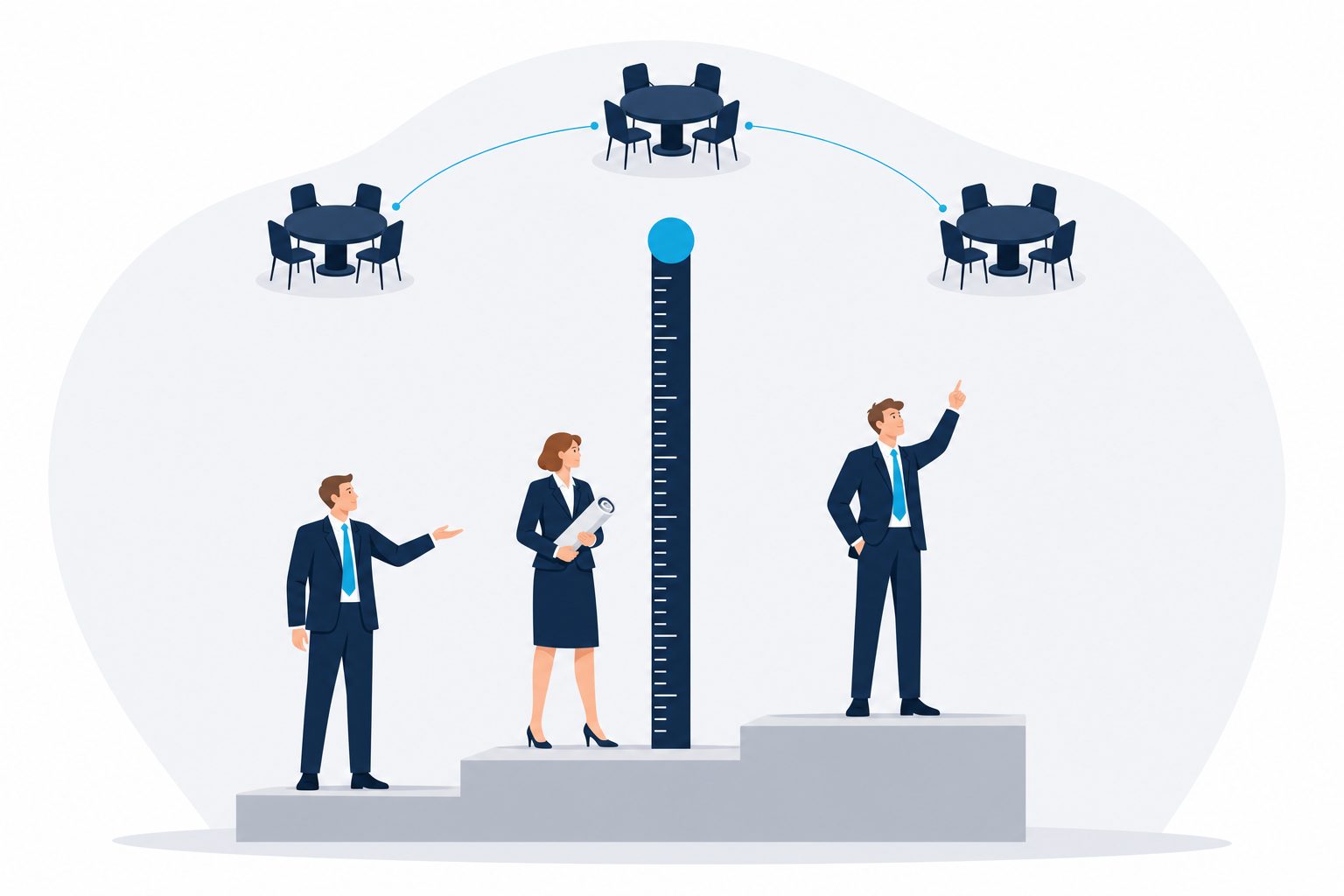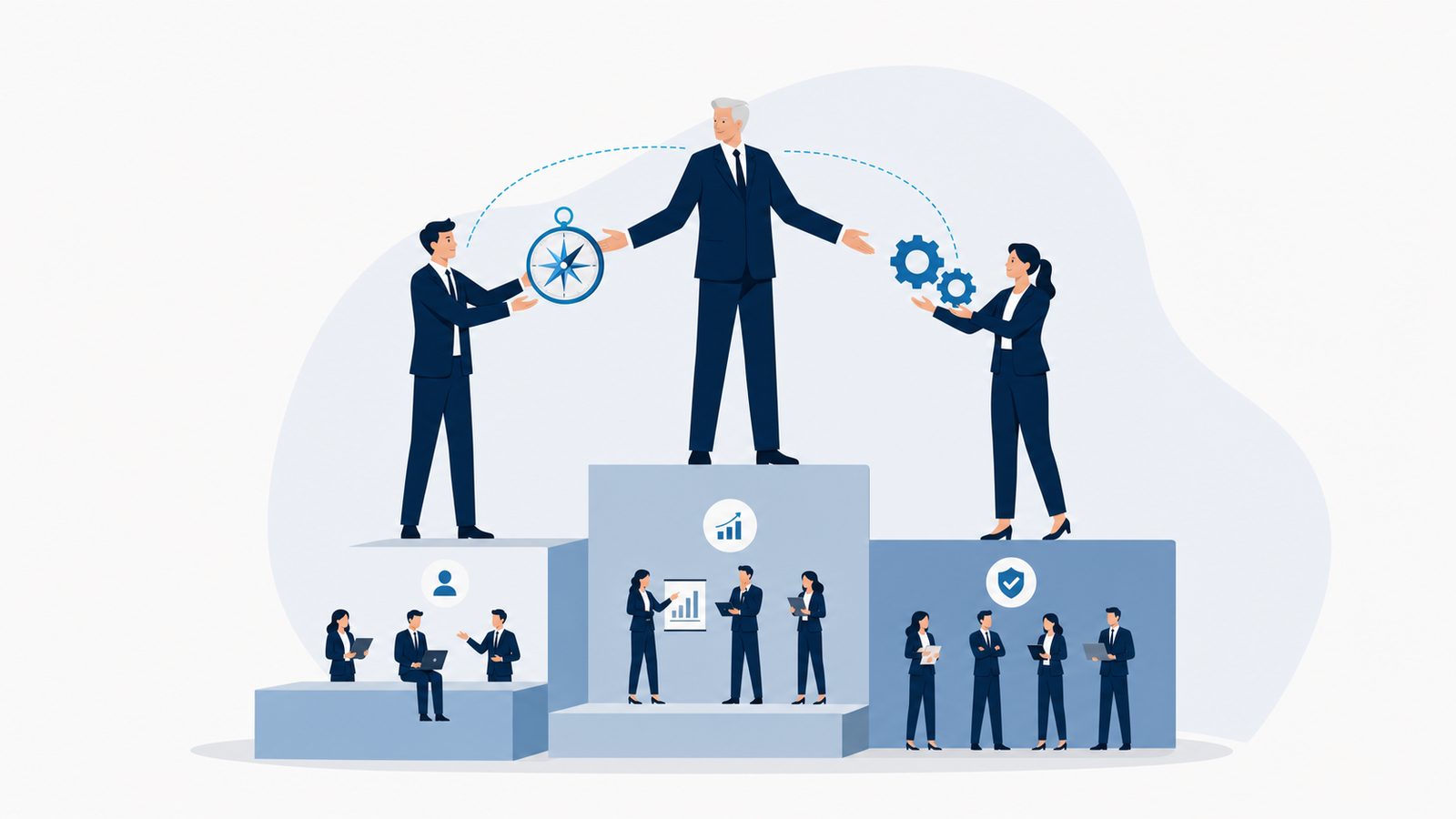
The founder of a privately held industrial group prepared to retire and hand the business to the second generation. An analysis of the nature of the chairman and CEO roles — followed by individual appreciations of family successors — allowed the family to divide what the founder had carried alone. One successor was consolidated as CEO, another as chairman, and the group kept growing.
Engagement at a glance
- Industry
- Industrial manufacturing (privately held family group)
- Organization size
- Multi-company group
- Geography
- Regional footprint, with international joint-venture partners
- Organizational stage
- Stage Three — Operational Maturity, transitioning toward Strategic Coherence
- Primary challenge
- Founder succession & generational transition
- Engagement
- Role design (chairman & CEO), executive appreciation & succession architecture
- Duration
- Multi-phase engagement
Organization
The client is a privately held industrial group built over decades by its founder: several operating companies serving demanding industrial customers, with a track record of growth through joint ventures with international partners. The founder had long carried governance and management as a single, personal role. As retirement approached, the group faced the transition that defines family enterprises — moving from a founder who is the institution to an institution that can outlast any person.
The challenge
The succession question looked like one decision but was really several. Who from the second generation could lead the group as CEO? What would the chairman's work become once the founder stepped back? Could two siblings hold the two roles without the ambiguity that erodes both? And beneath the family question sat an enterprise question: the group's growth strategy depended on joint ventures and increasingly sophisticated operations, which meant the leadership standard could not be inherited informally — it had to be defined. A transition managed on trust alone risked the business; one managed on evidence could protect both the enterprise and the family.
The appreciation
The analysis began with the work, not the people. Defining the nature of the chairman role and the CEO role made visible what the founder had held as one: the governing work of direction, ownership, and continuity, and the managing work of running and renewing the operating group. Individual appreciations of second-generation members then examined how each person's capability and way of working matched each role — allowing the family to consolidate one successor as CEO and another as chairman of the group with clarity about why.
The same discipline was extended downward: the nature of each operating company's CEO role and their direct reports was defined, producing a shared standard of complexity and capability across the group — a benchmark the group had never had.
The response
The transition was executed as architecture rather than announcement. The chairman and CEO roles were designed and separated, each successor confirmed against the work through appreciation, and the founder's retirement sequenced with both seats functioning. The cascade of role definitions across the operating companies became a working instrument: where the internal bench did not match a role's demands, the definitions guided external recruitment of executives against an explicit standard rather than instinct — and gave the group and its partners a common language for staffing the leadership of new joint ventures. What began as a family transition became a durable operating standard for the whole group.
Outcomes
The founder retired with the business in the family's hands and the enterprise intact: a second-generation CEO and a second-generation chairman, each in a role designed for the work it must carry. The role benchmarks now operate beyond the succession — supporting external executive recruitment and the leadership demands of aggressive growth through joint ventures. The group gained what founder-led companies rarely possess: an explicit standard for the work its leaders must be able to do.
Key insight
Founder succession is rarely about replacing one person; it is about separating the kinds of work one person held — governing and managing — and matching each to the capability it truly requires.
Client identity withheld. Details anonymized to preserve confidentiality while keeping the case executively legible.